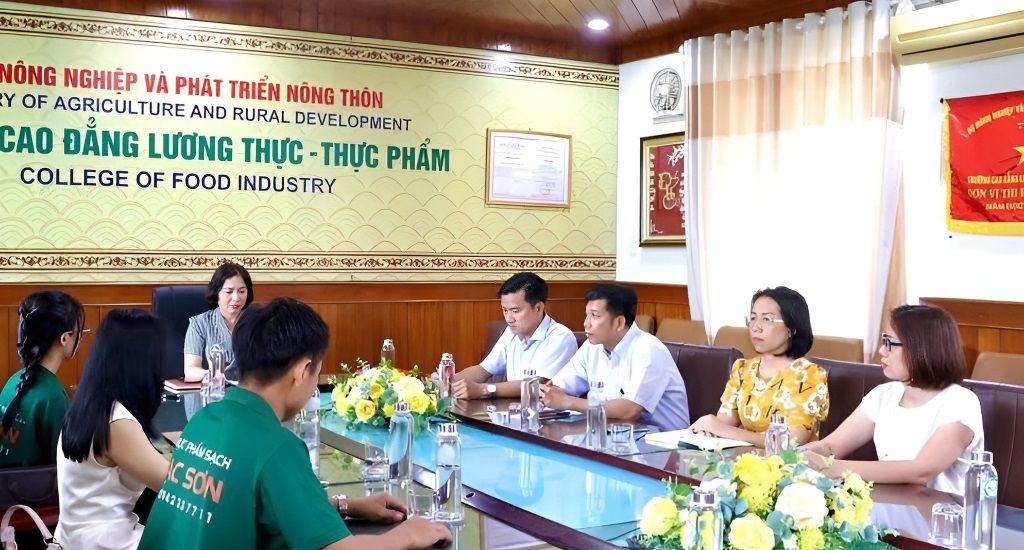
WELCOME SI DINING TO VISIT LAC SON FARM
Other news
-
What is mineral wool?
Post date: 01/07/2025

Information


Other news
Post date: 01/07/2025
Information



Free range farming, no antibiotics - replaced with perilla leaves, lemongrass, and ginseng.
Production process meets international HACCP standards.
Products have no antibiotic residues, no chemicals, no growth hormones.
A wastewater and domestic water treatment system is designed to remove pollutants and contaminants from domestic or industrial wastewater, with the aim of returning clean water to the environment or reusing it. This system is crucial for environmental protection, public health, and ensuring clean water for daily use, production, and consumption.
Domestic wastewater refers to wastewater generated from daily human activities in households, residential areas, office buildings, schools, hospitals, etc. It includes wastewater from toilets, kitchens, showers, laundry, and other household activities.
Preliminary Treatment:
Objective: Remove large solid particles, debris, oils, and grease from wastewater.
Method: Use screens, grates, and settling tanks to remove coarse solids and waste.
Primary Treatment:
Objective: Remove suspended solids and organic sludge from wastewater.
Method: Use settling tanks to separate larger particles from the water.
Secondary Treatment (Biological Treatment):
Objective: Remove dissolved organic matter and microorganisms.
Method: Use microorganisms to decompose organic substances in wastewater. Common methods include aeration tanks (activated sludge) or biological filtration systems.
Tertiary Treatment (Chemical Treatment):
Objective: Remove remaining pollutants, especially nutrients like nitrogen and phosphorus.
Method: Apply chemicals to neutralize or precipitate contaminants, and possibly use filtration systems like ultrafiltration or reverse osmosis (RO).
Disinfection:
Objective: Eliminate bacteria, viruses, and pathogens that may still be present in the water after the treatment stages.
Method: Use chemicals like chlorine, ozone, or ultraviolet (UV) light for disinfection.
Reuse or Discharge into the Environment:
Objective: Provide treated water for reuse or discharge it into the environment without causing pollution.
Method: Treated water can be reused for irrigation, vehicle washing, or discharged into public drainage systems.
Industrial wastewater is generated from manufacturing and processing activities, containing chemicals, oils, heavy metals, and other pollutants.
Industrial wastewater treatment systems are typically more complex and require specialized treatment methods depending on the industry and the characteristics of the wastewater.
Environmental Protection: Wastewater treatment prevents water, soil, and air pollution, protecting ecosystems and natural resources.
Public Health Protection: Removal of bacteria, viruses, and harmful substances helps prevent diseases and ensures the health of the population.
Water Reuse: Treated water can be reused for non-potable purposes such as irrigation, cooling, or industrial processes.
Compliance with Legal Regulations: Treatment systems help facilities and residential areas comply with environmental protection laws, avoiding fines and legal issues.
A wastewater and domestic water treatment system plays a vital role in maintaining a clean and sustainable living environment. These systems remove pollutants from domestic and industrial wastewater, protecting public health and the environment, and also contributing to the efficient reuse of water.
Maintenance services for mechanical, electrical, and thermal equipment are crucial services that help ensure the stable and efficient operation of mechanical, electrical, and thermal systems in factories, enterprises, buildings, and production facilities. Maintenance not only helps prevent breakdowns but also extends the lifespan of equipment, reduces repair costs, and increases productivity.
Mechanical equipment maintenance involves machines and mechanical devices such as motors, pumps, fans, compressors, conveyors, etc. The maintenance work focuses on inspecting, adjusting, and replacing mechanical components to ensure smooth operation.
Inspecting mechanical integrity: Ensure that the equipment is not worn out, damaged, or weakened due to time.
Lubrication and cleaning: Ensure that moving parts are adequately lubricated to reduce friction and improve efficiency.
Inspecting and replacing parts: Check components like bearings, belts, gears, and drive systems, and replace them as necessary.
Alignment and adjustments: Check the accuracy of moving parts and make necessary adjustments to optimize performance.
Electrical equipment maintenance involves electrical systems, electric motors, electrical panels, control boards, and other electrical devices. The aim of this work is to ensure stable operation and prevent electrical issues such as overloading, short circuits, or sudden power outages.
Inspecting electrical systems: Check wiring, fuses, sockets, switches, and protection devices to detect faults or issues.
Inspecting and replacing electrical components: Check electric motors, electrical panels, controllers, and replace components such as capacitors, starters, or switches.
Cleaning electrical equipment: Remove dirt, dust, and check electrical connections to prevent short-circuiting or fires.
Inspecting and replacing protective devices: Regularly check protection devices like relays, fuses, and circuit breakers to ensure safety during malfunction.
Thermal equipment maintenance involves systems related to heat, such as boilers, air conditioning systems, heat exchangers, coolers, and other heat transfer equipment in factories. This maintenance helps maintain thermal energy efficiency and prevent thermal-related malfunctions.
Inspecting boiler systems: Ensure pressure, temperature, and combustion processes are stable and heat transfer is efficient.
Cleaning and maintaining heat exchangers: Remove sediment, blockages, and maintain heat exchange components to improve efficiency.
Inspecting cooling systems: Ensure that coolers or refrigeration systems are working well, with no blockages or equipment failures.
Maintaining HVAC systems: Ensure that the HVAC (Heating, Ventilation, and Air Conditioning) system operates efficiently, check filters, valves, and temperature control systems.
Extend equipment lifespan: Regular maintenance helps identify and address minor issues before they become major problems, thus extending the equipment's lifespan.
Improve operational efficiency: Maintenance ensures that equipment runs smoothly, reducing downtime in production.
Cost savings: Timely maintenance helps avoid large repair costs and minimizes downtime.
Ensure workplace safety: Regular inspection and maintenance of electrical and mechanical equipment help detect potential hazards, ensuring worker safety.
Comply with legal regulations: Factories and production facilities often have to comply with regulations regarding equipment maintenance and safety, and regular maintenance ensures compliance.
Scheduled Maintenance: Conducted according to a predefined schedule to ensure that equipment remains in good working condition.
Condition-Based Maintenance: Performed when abnormalities or issues are detected in the equipment's performance.
Emergency Maintenance: Carried out when a piece of equipment breaks down unexpectedly and immediate repair is needed to avoid operational disruption.
Maintenance services for mechanical, electrical, and thermal equipment play a vital role in maintaining the smooth operation of equipment systems in industrial sectors, helping optimize productivity, reduce costs, and ensure workplace safety. Performing regular and timely maintenance will improve work efficiency and minimize the risk of failures.

